
Retail vs Restaurant Fit-Out: Key Differences Explained by Experts in UAE
In Dubai’s competitive commercial landscape, design is not decoration. It is strategy. Whether you are launching a boutique or opening a restaurant, the approach to shop fit-out in Dubai and restaurant interiors must align with business goals, customer behavior, and operational flow. Many business owners assume both follow the same process. That assumption costs time, money, and performance.
This guide breaks down the real differences between retail and restaurant fit-outs, with expert insights from the best interior fit out company in UAE.
Understanding the Purpose Behind Each Fit-Out
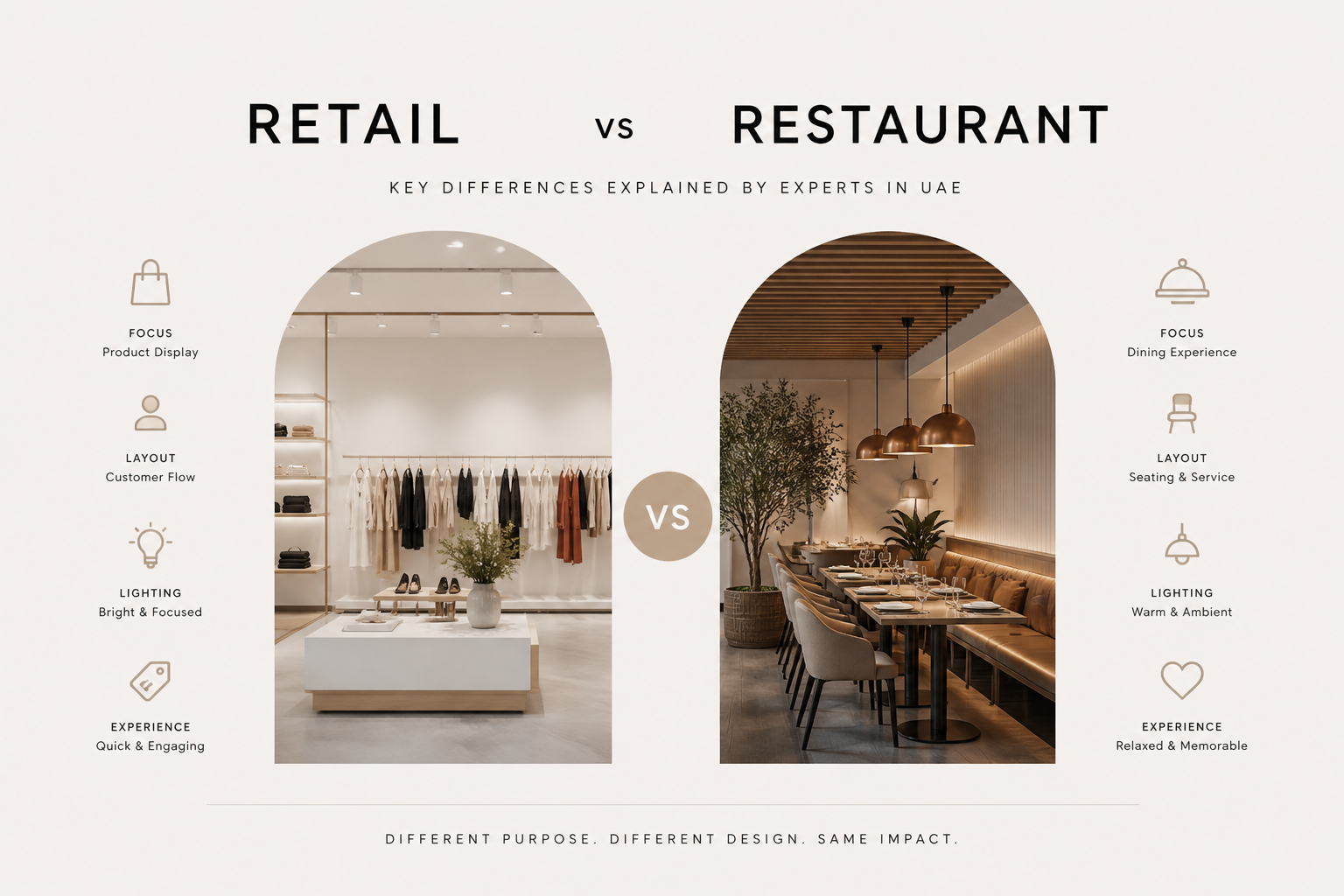
Retail and restaurant spaces serve entirely different functions. Retail stores focus on product visibility, brand storytelling, and smooth customer navigation. Restaurants, on the other hand, prioritize customer experience, seating comfort, and efficient service flow.
In interior fit out in Dubai, purpose dictates everything. A retail store must drive browsing and impulse buying. A restaurant must encourage customers to stay longer and return.
Layout Planning and Space Utilization
Layout is where the biggest contrast appears.
Retail fit-outs are designed for movement. Wide aisles, clear pathways, and strategic product placement guide customers through the store. The goal is exposure to maximum products with minimal friction.
Restaurant fit-outs are built around seating density and service efficiency. Table spacing, kitchen access, and staff movement are critical. Every square foot must balance comfort with revenue generation.
A professional team handling shop fit-out in Dubai will design layouts that influence customer behavior, while restaurant specialists focus on operational precision.
Lighting Strategy and Ambience
Lighting in retail spaces is sharp and focused. It highlights products, creates contrast, and directs attention. Accent lighting plays a major role in influencing purchase decisions.
Restaurants use layered lighting. Ambient lighting creates mood, while task lighting ensures functionality. Warm tones dominate dining spaces to create a relaxed environment.
The difference is clear. Retail lighting sells products. Restaurant lighting sells experiences.
Material Selection and Durability
Material choices vary significantly based on usage.
Retail spaces often use sleek finishes such as glass, metal, and polished surfaces to reflect a modern brand image. Durability matters, but aesthetics take priority.
Restaurants demand heavy-duty materials. Heat resistant surfaces, anti slip flooring, and easy to clean finishes are essential. Kitchens require industrial grade materials that meet hygiene and safety standards.
This is where working with the best interior fit out company in UAE becomes critical. They understand how to balance aesthetics with performance in both environments.
Compliance and Regulations
Regulatory requirements in Dubai are strict, especially for restaurants.
Retail fit-outs primarily follow mall or commercial building guidelines. These include signage rules, fire safety measures, and accessibility standards.
Restaurant fit-outs involve additional approvals related to food safety, ventilation, drainage, and kitchen layout. Authorities such as Dubai Municipality enforce strict compliance.
Ignoring these requirements can delay project completion and increase costs. Experienced professionals in interior fit out in Dubai ensure every regulation is met from day one.
Technology and Functional Integration
Retail spaces are evolving with technology. Digital displays, smart billing systems, and interactive screens enhance customer engagement.
Restaurants integrate technology differently. POS systems, kitchen display systems, and automated ordering solutions improve service speed and accuracy.
Both require seamless integration, but the purpose differs. Retail uses tech to attract. Restaurants use tech to operate efficiently.
Customer Experience Design
Retail experience is fast and dynamic. Customers enter, explore, and purchase. Design elements must capture attention within seconds.
Restaurant experience is immersive. From entrance to seating, every detail influences perception. Music, lighting, textures, and layout work together to create a memorable dining journey.
This difference defines the entire shop fit-out in Dubai approach compared to restaurant interiors.
Timeline and Execution Complexity
Retail fit-outs are generally faster to execute. The scope is simpler, and fewer technical installations are required.
Restaurant fit-outs are complex. Kitchen equipment, ventilation systems, plumbing, and safety installations extend timelines. Coordination between multiple teams is essential.
Choosing the best interior fit out company in UAE ensures smooth execution, minimizing delays and costly mistakes.
Cost Factors and Investment Priorities
Retail fit-out costs focus on visual merchandising, branding elements, and display systems.
Restaurant fit-outs require higher investment due to kitchen infrastructure, specialized equipment, and compliance requirements.
While both are investments, restaurant projects demand a more detailed financial plan. Cutting corners in either can impact long term performance.
Final Thoughts
Retail and restaurant fit-outs may fall under the same category of interior fit-out in Dubai, but they operate on completely different principles. One is designed to drive product sales through movement and visibility. The other is built to deliver an experience through comfort, ambience, and service efficiency.
Understanding these differences is not optional. It is essential for business success.
Partnering with the best interior fit out company in UAE gives you more than design. It provides strategy, compliance, and execution aligned with your business goals. Whether you are planning a retail store or a restaurant, the right fit-out approach will define how your customers see, feel, and interact with your brand.