
Biophilic Retail Interior Fit Out Trends Gaining Popularity in Dubai
Let’s get one thing straight. Biophilic design in Dubai retail is not a “nice-to-have.” It’s not a Pinterest mood board exercise. It’s a commercial response to how people shop today. If your retail space still relies on glossy finishes, cold lighting, and generic layouts, that idea is already outdated. I’ll call it what it is: lazy thinking.
Dubai’s retail market is brutal. Rent is high, competition is relentless, and customers are spoilt for choice. Every square meter has to earn its keep. Biophilic design is gaining traction here because it works. It drives footfall, increases dwell time, and improves brand recall. This isn’t philosophy. It’s performance.
Let’s break this down properly, using clear thinking, not fluff.
What Is Driving the Shift Toward Biophilic Retail in Dubai?
Who is pushing this trend?
Retail brands that understand experience beats price.
What is changing?
Retail interiors are moving from transactional boxes to immersive environments.
Where is this happening?
High streets, malls, lifestyle destinations, and flagship stores across Dubai.
When did it accelerate?
Post-pandemic. Shoppers became more selective and more human.
Why does it matter?
Because people don’t linger in spaces that feel artificial and stressful.
How is it implemented?
Through nature-inspired materials, lighting, layouts, and sensory design.
If your concept ignores even one of these, it’s incomplete. And incomplete ideas don’t survive in Dubai.
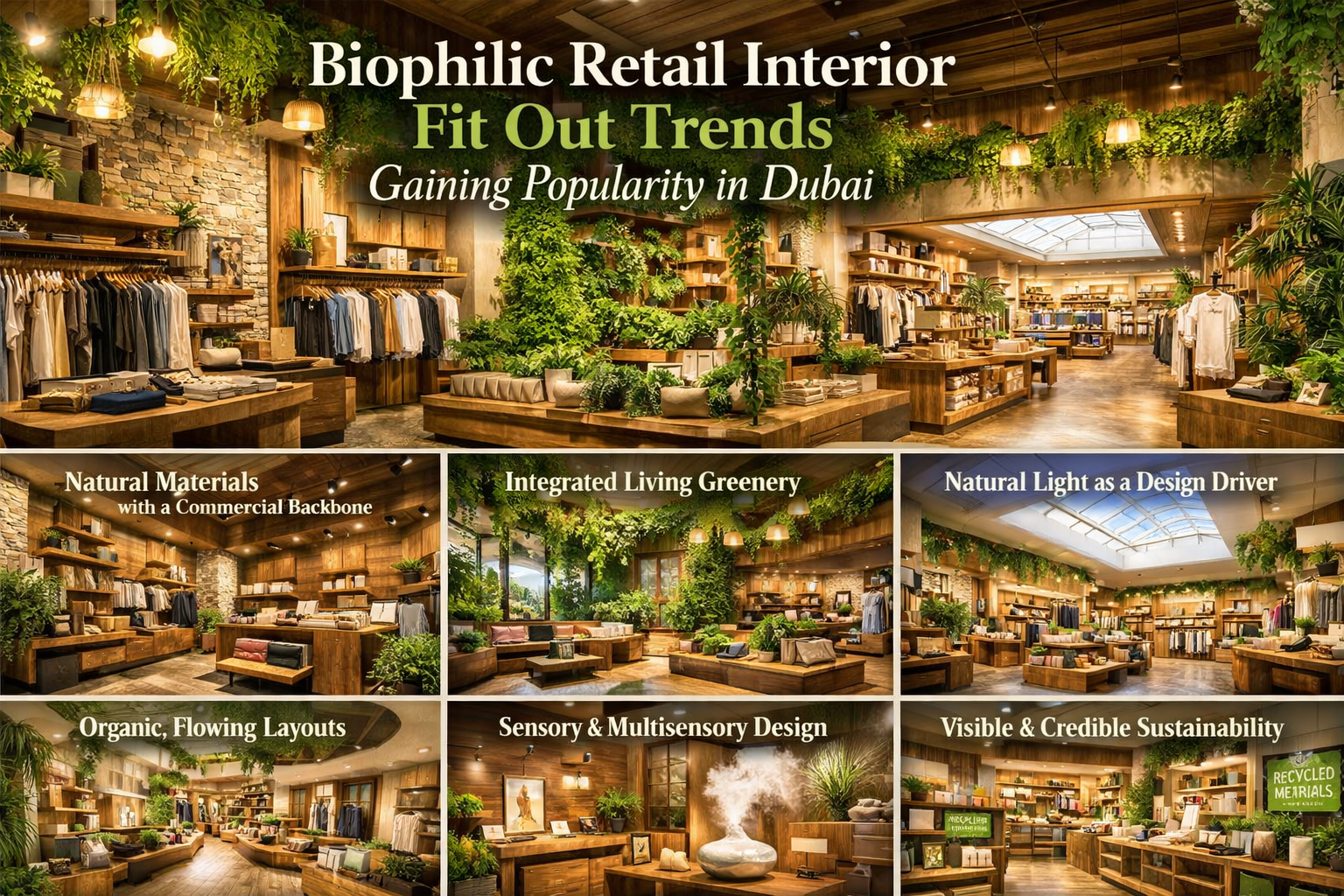
Trend 1: Natural Materials With a Commercial Backbone
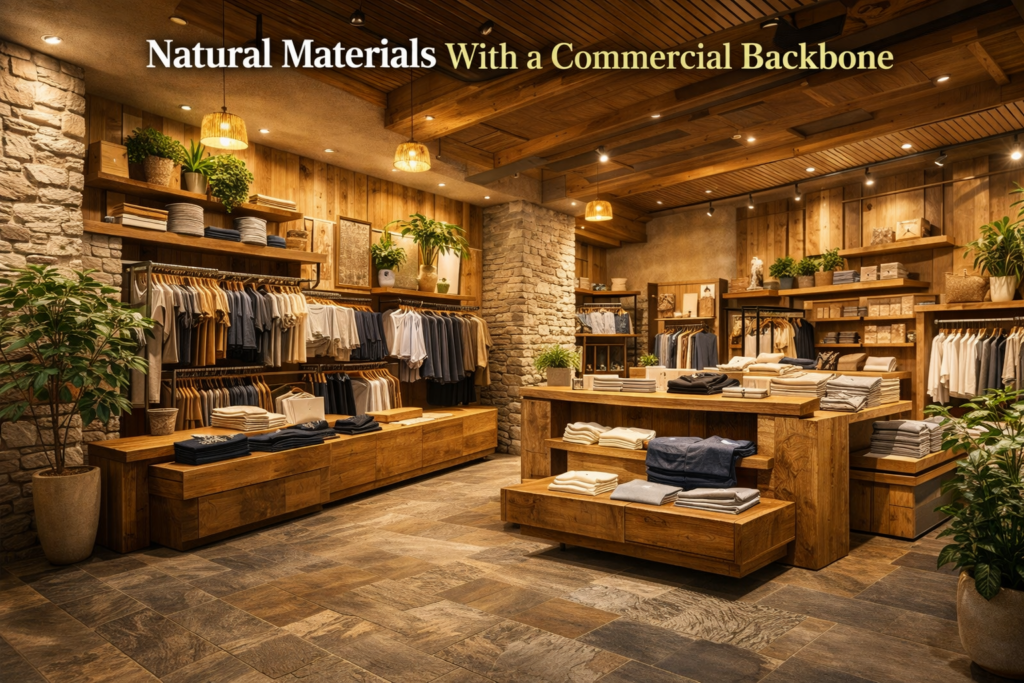
Wood, stone, clay finishes, linen textures. You’ve seen them. But here’s the mistake most brands make. They treat natural materials like decoration. That’s amateur hour.
In Dubai, biophilic retail interiors use natural materials strategically. Timber panels guide movement. Stone flooring defines zones. Textured walls absorb sound and reduce noise fatigue. Every material choice serves a functional purpose.
This is where a strong retail interior fit out approach matters. Without technical detailing, humidity control, and durability planning, natural materials fail fast in this climate. If your supplier can’t explain lifecycle costs, walk away.
Trend 2: Living Greenery That’s Integrated, Not Stuck On
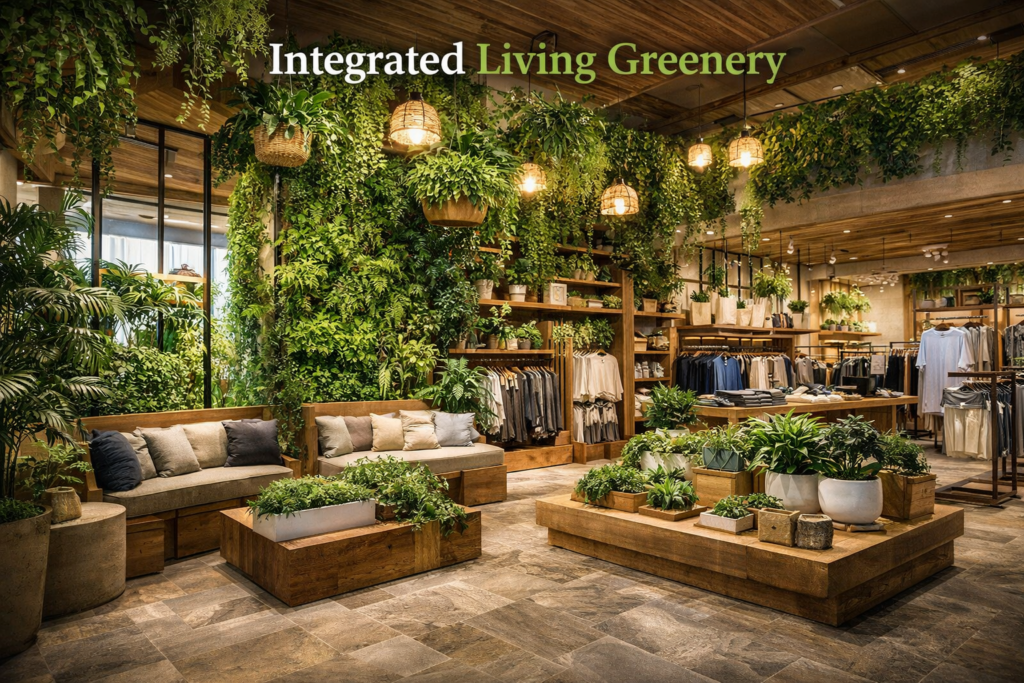
Let me be blunt. A fake plant wall slapped behind the cashier is trash. Customers can tell.
What’s gaining popularity is integrated greenery. Vertical gardens that improve acoustics. Planters that double as spatial dividers. Hanging plants that soften ceiling grids and lighting.
Dubai retailers are also investing in irrigation systems and low-maintenance species suited for indoor environments. This isn’t about looking green. It’s about feeling alive.
Executed well, this elevates the entire retail fit out from a visual asset to a sensory one.
Trend 3: Natural Light as a Design Driver
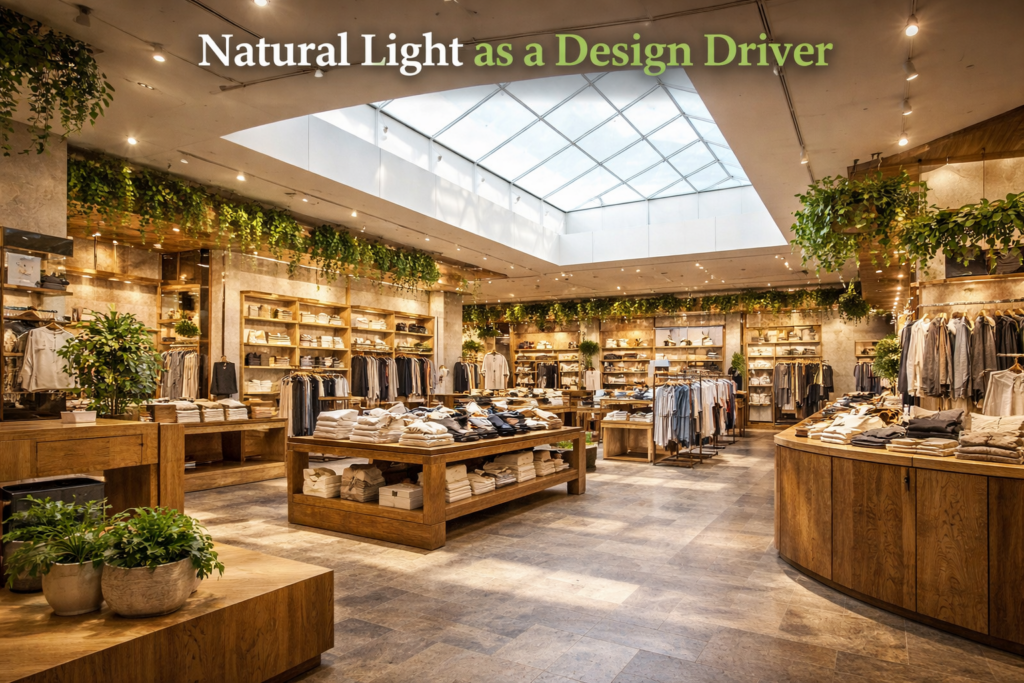
If your layout blocks daylight, your design logic is broken.
Retailers in Dubai are rethinking storefront transparency, skylights, and internal lighting plans. The goal is simple. Mimic outdoor light patterns indoors.
Warm lighting zones encourage browsing. Brighter zones trigger decision-making. Shadow and contrast add depth. This is retail psychology 101, yet most stores still ignore it.
When daylight is treated as a core input, not an afterthought, the retail fit out performs better across every KPI that matters.
Trend 4: Layouts That Flow Like Nature, Not a Warehouse
Rigid grids are dying. Customers don’t want to feel herded.
Biophilic retail layouts borrow from nature’s logic. Curved pathways. Layered sightlines. Micro zones that invite discovery. These layouts slow customers down, which is exactly what you want.
Dubai shoppers value exploration. A space that feels intuitive and relaxed keeps them engaged longer. That directly impacts basket size.
This is where many retail shop fit-outs fail. They prioritise stock density over experience. That mindset is short-term and self-defeating.
Trend 5: Sensory Design Beyond What You See
Biophilic design isn’t just visual. It’s multisensory.
Sound matters. Soft acoustics reduce stress.
Scent matters. Natural aromas build emotional memory.
Touch matters. Matte, warm surfaces feel premium.
Dubai retailers are becoming smarter about this. They’re using materials and systems that create calm in busy environments. If your store feels chaotic, customers subconsciously rush to leave.
This is especially critical in mall-based retail store fit out projects, where external noise and foot traffic are intense.
Trend 6: Sustainability That Is Visible and Credible
Dubai consumers are more informed than brands give them credit for. Surface-level sustainability claims don’t fly anymore.
Retailers are showcasing recycled materials, low-VOC finishes, and energy-efficient systems openly. Transparency builds trust. Hidden sustainability doesn’t sell.
The smart ones align with a top interior fit out company in Dubai that can document and explain these choices. If sustainability can’t be measured or explained, it’s marketing noise.
Why Biophilic Retail Makes Business Sense in Dubai
Let’s cut through the design romance and talk numbers.
Biophilic interiors increase dwell time.
Longer dwell time increases conversion.
A better experience improves brand loyalty.
In a city where retail fit out Dubai costs are high, anything that improves return per square foot is worth serious attention.
This isn’t about trends. It’s about competitive advantage.
Final Reality Check
If you think biophilic design is just about adding plants, your idea is weak. If you treat it as an Instagram aesthetic, it will fail. And if your retail fit out partner can’t connect design decisions to commercial outcomes, you’re burning money.
Dubai rewards retailers who think holistically. Space, psychology, operations, and brand must align. Biophilic retail interior fit out trends are rising because they deliver on all four.
Ignore this shift, and your store becomes invisible. Embrace it properly, and your space works harder than any salesperson ever could.
That’s the difference between design that looks good and design that performs.